Kerala Aviation Job Market 2026: Where the Hiring Is
 General
Anyone assessing the Kerala aviation job market 2026 will find plenty of enthusiasm and very little structure. This piece takes a different approach: it separates the roles that are genuinely growing from those that are flat, describes how pay is structured rather than quoting figures that go stale within months, and identifies the specific skills that move someone from an entry level position into a career. Where numbers are not verifiable, that is stated plainly rather than filled in with an estimate.
Key Takeaways
- Kerala's four airports and a strong outbound travel base sustain steady demand for ground and passenger service roles.
- Pay in this sector is structured around allowances, shift differentials and progression rather than a single headline figure.
- The fastest growing categories are cargo and logistics handling, safety and compliance, and airport customer experience roles.
- Progression past entry level depends on a specific certification, a language, or a systems skill rather than on years served.
What Actually Drives Aviation Hiring in Kerala
The state's position is unusual. Kerala operates four commercial airports serving a population with exceptionally high outbound travel, which produces a steady base of passenger volume that is less dependent on domestic business travel than in most other states.
Migration patterns shape this directly. Sustained movement between Kerala and the Gulf creates predictable, high frequency traffic on those routes, and the ground handling, documentation, and passenger service capacity required to support it does not fluctuate sharply.
The Airports Authority of India sets much of the operational framework these roles work within, and its standards define what ground staff, security coordination, and terminal operations positions actually require in practice.
Cargo has become the more interesting growth story. Perishable exports of spices, seafood, and horticultural produce move through Kerala airports in volume, and the handling, documentation, and cold chain coordination around them are increasingly specialised roles.
The national sector context matters for direction rather than for specifics. Industry analysis published by IBEF tracks capacity expansion across Indian aviation, which flows through to hiring at state level with a lag.
Kerala also exports aviation talent rather than only employing it. A significant share of graduates from this state work for Gulf carriers and airports, which means local training feeds an international market as much as a domestic one. The structural pressures behind that demand are described in this look at why the industry is hiring now.
The practical implication is that the aviation programme at Guiders Education should be assessed as two markets at once: local ground and passenger roles, and outbound recruitment into international carriers and airport operators.
How Pay Is Actually Structured
Quoting a single salary figure for aviation roles is misleading, which is why this article does not. Compensation in the sector is assembled from a base, shift and night allowances, layover payments where applicable, and performance or attendance components.
That structure means two people in the same job title can earn materially different amounts. Someone working night rotations and international sectors will take home considerably more than a colleague on day shifts in the same grade and organisation.
Entry level ground and passenger service roles broadly sit alongside other graduate entry positions in the region, which surprises candidates who expected the visible glamour of the industry to translate directly into starting pay.
The change comes at the first progression step rather than through annual increments. Moving from an assistant grade to a supervisory or specialist grade produces a larger jump than several years of routine service in the same position.
International roles are structured differently again. Gulf carrier packages typically combine salary with accommodation, transport, and allowances, so comparing them to a local figure without accounting for those components produces a misleading conclusion.
The existing overview of salary in the aviation industry covers the general shape of this, and the roles listed among the highest paying aviation jobs show where the upper bands sit.
Anyone comparing offers should therefore compare total packages including allowances, roster pattern, and progression policy rather than headline monthly figures, which is the single most common mistake made by first time candidates.
Contract type is worth checking as well. Fixed term arrangements are common in ground handling through third party operators, and the difference between a direct airport authority role and a contracted position affects both stability and progression more than the monthly figure does.
The Roles Growing Fastest in 2026
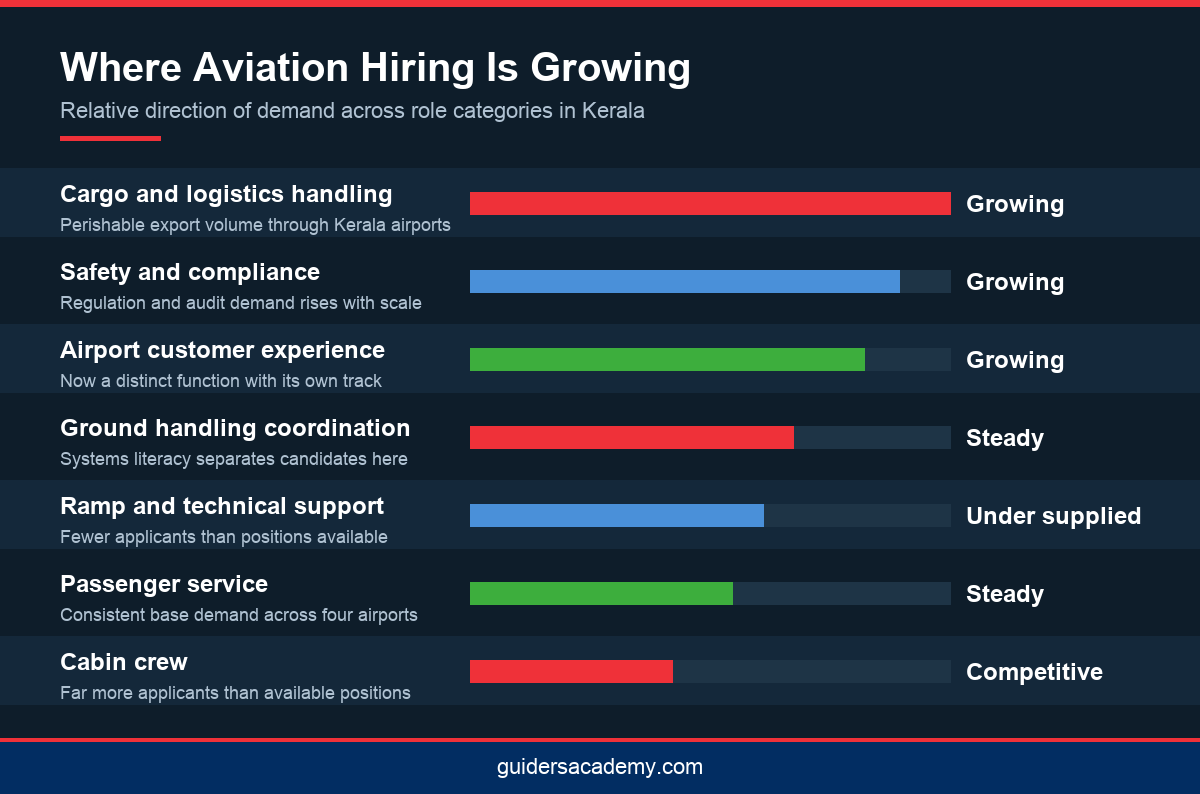
Cargo and logistics handling is the clearest growth area. The volume of perishable export moving through Kerala airports requires documentation accuracy, cold chain awareness, and coordination skills that overlap heavily with supply chain training.
Safety and compliance roles are expanding alongside it. As operations scale, the requirement for people who understand regulation, documentation, and audit processes grows faster than the requirement for general operational staff.
Airport customer experience has become a distinct function rather than part of general passenger service. Managing queue design, accessibility support, and complaint resolution is increasingly treated as a specialism with its own career track.
Ramp and technical support roles remain steady rather than growing, but they are consistently under supplied because fewer candidates target them. That imbalance makes them a reasonable entry point for anyone willing to work outside the terminal.
Ground handling coordination benefits from systems literacy. Departure control systems, baggage reconciliation, and load planning tools are software driven, and candidates comfortable with them progress noticeably faster than those who are not.
Traditional cabin crew recruitment continues but remains highly competitive, with far more applicants than positions. It is a realistic goal, though it should not be the only goal in a candidate's plan for the year.
The broader picture of job opportunities in the aviation industry covers the full range of these positions, including several that graduates routinely overlook while focusing on flying roles. Several of the fastest-growing roles are tied to the shifts covered in emerging trends across the industry.
What Moves a Career Past Entry Level
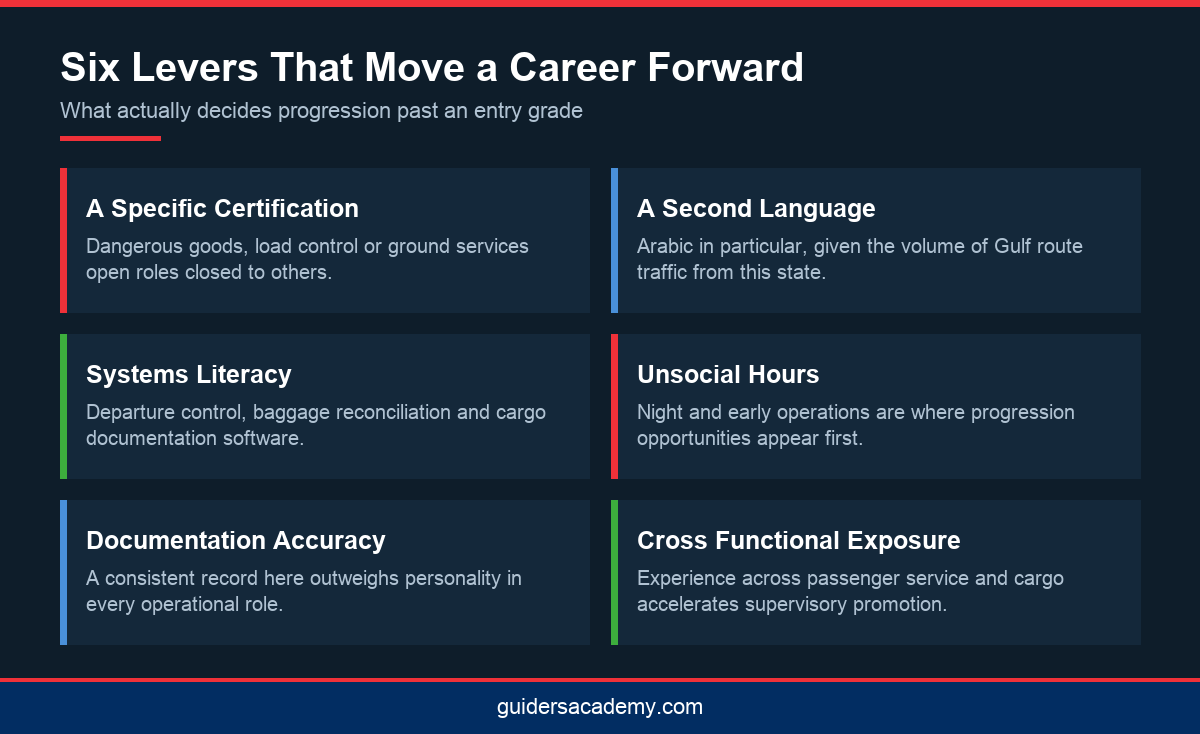
A specific certification is the most reliable lever. Dangerous goods handling, load control, ramp safety, and passenger ground services certifications each unlock roles that are closed to candidates without them, regardless of general experience.
A second language is the next most valuable asset. Arabic is particularly useful given Gulf route volume, and any additional European or Asian language widens options considerably for candidates targeting international carriers or airports.
Systems skills separate candidates faster than most expect. Comfort with departure control, cargo documentation, and reservation systems makes someone immediately deployable, and it is a gap that training programmes are only beginning to address properly.
Willingness to work unsocial hours is a genuine career advantage in this sector. Night operations, early departures, and rotating rosters are where progression opportunities appear first, because fewer colleagues volunteer for them.
Documentation accuracy matters more than personality in operational roles. A single error in cargo paperwork or passenger documentation creates delays and costs, so people with a consistent record of accuracy are promoted ahead of more charismatic colleagues.
Cross functional exposure compounds over time. Someone who has worked in both passenger service and cargo, or in both ground handling and compliance, becomes a candidate for supervisory roles far earlier than a specialist in one function.
The underlying capabilities are set out in this summary of the skills every aviation student should develop, and building them deliberately during training rather than afterwards shortens the path considerably. Candidates willing to move will find this piece on opportunities abroad useful.
Finally, treat the first two years as a positioning exercise rather than a destination. Candidates who deliberately choose roles that expose them to certification opportunities and systems work end up with far more options than those who simply accept whatever was offered first.
Conclusion
The Kerala aviation job market 2026 rewards candidates who look past the visible flying roles. Cargo handling, safety and compliance, and airport customer experience are growing faster than the categories most applicants target, and progression turns on a specific certification, a language, or a systems skill rather than on time served. Compare total packages rather than headline figures, and treat unsocial hours as an opportunity rather than a cost. To discuss which aviation track fits your goals, contact the Guiders Academy team.
Frequently Asked Questions
What does the Kerala aviation job market 2026 look like overall?

Why does this article not quote specific salary figures?
Which aviation roles are growing fastest in Kerala?
Is cabin crew still a realistic career goal?
How much difference does a language make?
What certifications improve employability most?
Are Gulf packages better than local ones?
How quickly can I move past an entry level role?
Which skills should I build during training?