Flutter App Development Course in Kerala: A Guide
 General
A Flutter app development course in Kerala is one of the fastest ways into mobile development, largely because Flutter lets a single codebase ship to both iOS and Android at once. Startups and agencies across Kerala increasingly reach for Flutter instead of building two separate native apps, which has turned it into one of the more practical mobile skills to learn right now. This guide covers what Flutter actually is, what a course should teach, what it pays, and where Flutter developers find work in Kerala.
Key Takeaways
- Flutter uses a single Dart codebase to ship to both iOS and Android, which cuts development time compared to building two native apps separately.
- A strong Flutter course should cover Dart fundamentals, the widget system, state management, API integration and publishing to app stores.
- Kerala's startup and agency mobile teams hire Flutter developers steadily, since the stack lets small teams ship cross platform apps faster.
Why Flutter Has Become a Default Choice for Mobile Apps
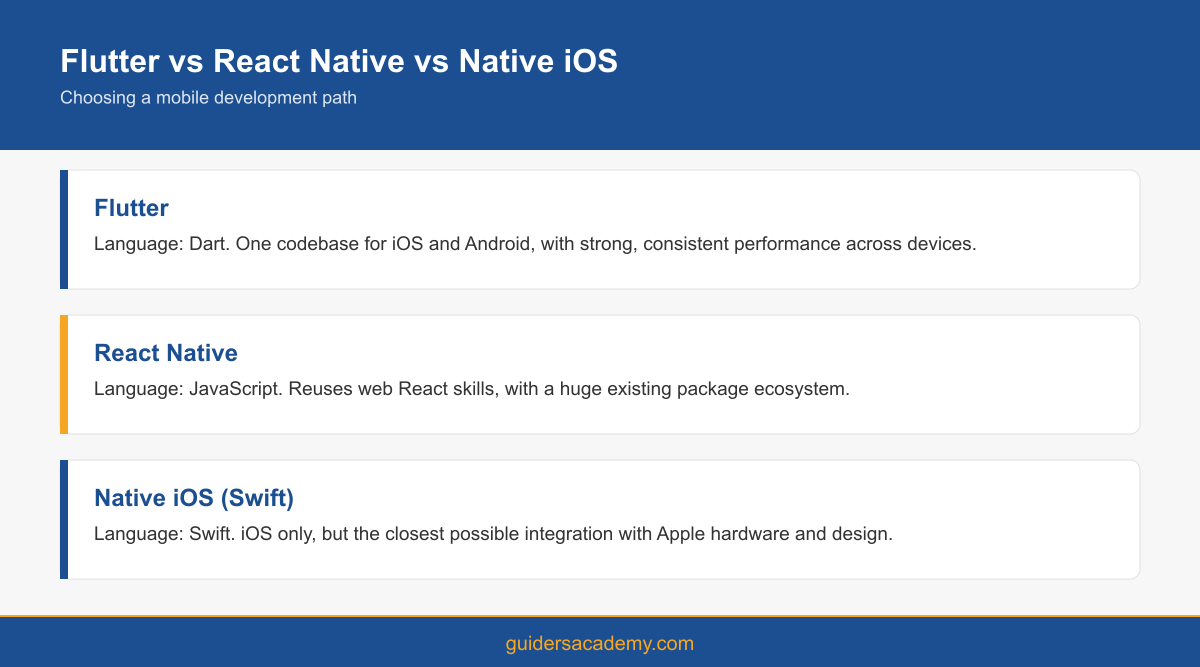
Flutter, built and maintained by Google, uses the Dart language to compile one codebase into native performance apps for both iOS and Android. Before cross platform toolkits matured, teams often had to build and maintain two separate apps, one in Swift for iOS and one in Kotlin or Java for Android, which roughly doubled development and maintenance cost.
Flutter closes most of that gap without the performance compromises that plagued earlier cross platform tools, which is why startups and agencies working under tight timelines increasingly default to it for new mobile products.
Because one team can maintain a single Flutter codebase instead of two separate native codebases, product updates ship to both platforms at the same time, which also reduces the chance of iOS and Android versions of the same app drifting out of sync with each other.
What a Flutter Course Should Cover
A solid Flutter course starts with Dart fundamentals, since Flutter is built entirely around the language, then moves into Flutter's widget system, the building blocks used to construct every screen. From there, the course should cover state management, connecting the app to real backend APIs, and finally packaging and publishing the finished app to the Google Play Store and Apple App Store.
The official Flutter documentation is worth exploring alongside any course, since Flutter updates its tooling regularly and staying current matters for long term employability. Guiders builds its app development courses around a real, published app project rather than isolated widget exercises.
Salary Expectations for Flutter Developers in Kerala
Entry level Flutter developers in Kerala typically start in a salary band comparable to other junior mobile and web roles, with pay increasing meaningfully once a developer has shipped at least one app to the Play Store or App Store independently.
Freelance Flutter work is particularly accessible compared to native mobile development, since a single developer can quote a client for both platforms at once rather than needing to bring in a second specialist, which often makes Flutter freelancers more cost competitive and, in turn, more in demand.
Developers who also pick up basic backend or API integration skills alongside Flutter tend to be offered better rates, since many small business clients want one developer who can handle the whole app rather than coordinating between a frontend and backend specialist.
Mobile Developer Jobs for Flutter Graduates in Kerala
Flutter developers in Kerala typically work at startups building their first mobile product, digital agencies serving multiple clients, or as freelancers building apps for small businesses. Because one Flutter developer can often deliver what would otherwise need separate iOS and Android specialists, small teams specifically look for Flutter skills to keep mobile development lean.
This pattern echoes a wider hiring trend, where companies increasingly prefer developers who can work across multiple parts of a product rather than narrow specialists, and cross platform mobile skills fit squarely into that preference.
Building a Flutter Portfolio That Gets You Hired
A single polished app tends to impress hiring managers more than three half finished projects. A good first Flutter portfolio piece solves a real, specific problem, a booking app, a local services directory, or an expense tracker with cloud sync, rather than another generic to do list clone that every self taught developer already has.
Publishing the finished app to the Play Store, even in a limited internal testing track, also signals to employers that you understand the full path from code to a real, installable product, not just the development environment inside an editor.
How to Choose the Right Flutter Training Institute
Confirm the course ends with an app you can actually install and demo, not just code snippets shown in class. Ask whether the institute tracks placement outcomes for mobile development graduates specifically, since Flutter hiring can look different from web development hiring.
Smaller batch sizes help more with Flutter than with some other stacks, because debugging mobile specific issues, device compatibility, build errors, app store requirements, benefits heavily from direct mentor support rather than generic troubleshooting guides.
Conclusion
A Flutter app development course in Kerala offers a genuinely efficient path into mobile development, since one codebase covering both major platforms lets small teams and freelancers compete with much larger development shops. What matters most is choosing a course that ends in a real, published app rather than disconnected lessons.
To learn how Guiders structures its Flutter app development course, get in touch with our team, or read more mobile development guides on our blog.
Frequently Asked Questions
What is a Flutter app development course in Kerala good for?

Do I need prior coding experience to learn Flutter?
How is Flutter different from React Native?
How long does it take to become job ready in Flutter?
Can one person really build both an iOS and Android app with Flutter?
What jobs can I get after a Flutter course?
Does Guiders Academy offer placement support for Flutter graduates?
Is Flutter suitable for building complex, large scale apps?
Do I need a Mac to learn Flutter development?
Where can I learn more about Guiders Academy as an institute?