Why Companies Prefer Full Stack Developers Over Specialists
 General
The demand for full stack developers has surged dramatically over the last few years. Companies of all sizes are rethinking their hiring strategies, and the shift is clear: businesses prefer developers who can handle both front-end and back-end tasks over those who specialize in just one area. If you are exploring a full stack developer course, understanding why companies make this choice can help you plan your career with confidence.
This blog explores the core reasons businesses favor full stack developers, what skills they bring to the table, and how the right full stack development course can position you for long-term success in the tech industry.
Key Takeaways
Companies prefer full stack developers because they reduce hiring costs and improve team flexibility.
A full stack web development course prepares you with both front-end and back-end skills that employers actively seek.
Enrolling in a full stack developer course in Kochi or Thrissur can give Kerala-based students a strong local and global career advantage.
The Business Case for Hiring Full Stack Developers
Small and mid-sized businesses often operate with lean teams. Hiring two separate specialists, one for the front end and one for the back end, doubles recruitment costs and creates communication gaps. A full stack developer fills both roles efficiently, making collaboration smoother and projects faster to complete.
According to industry reports from Stack Overflow, full stack developer consistently ranks among the most sought-after tech profiles globally. Startups especially value this versatility because a single developer can prototype, build, and deploy a product without waiting on another team member. For students considering a full stack developer course, this hiring preference directly translates into more job opportunities and stronger negotiating power.
Full Stack Developers Bridge Communication Gaps
One of the biggest challenges in software teams is the disconnect between front-end and back-end specialists. Each side speaks a different technical language, which often leads to delays, misunderstandings, and rework.
A full stack developer understands the entire codebase. They can see how user interface decisions impact server performance and vice versa. This holistic view reduces back-and-forth and speeds up the development lifecycle. When companies hire a full stack web development course graduate, they gain someone who can troubleshoot across the entire system, not just one side of it. This saves both time and money on every project.
Why Full Stack Skills Matter in Web App Development
Modern web app development requires developers who can navigate multiple technologies simultaneously. From designing responsive layouts using HTML, CSS, and JavaScript to building robust APIs and managing databases, the scope of development has expanded.
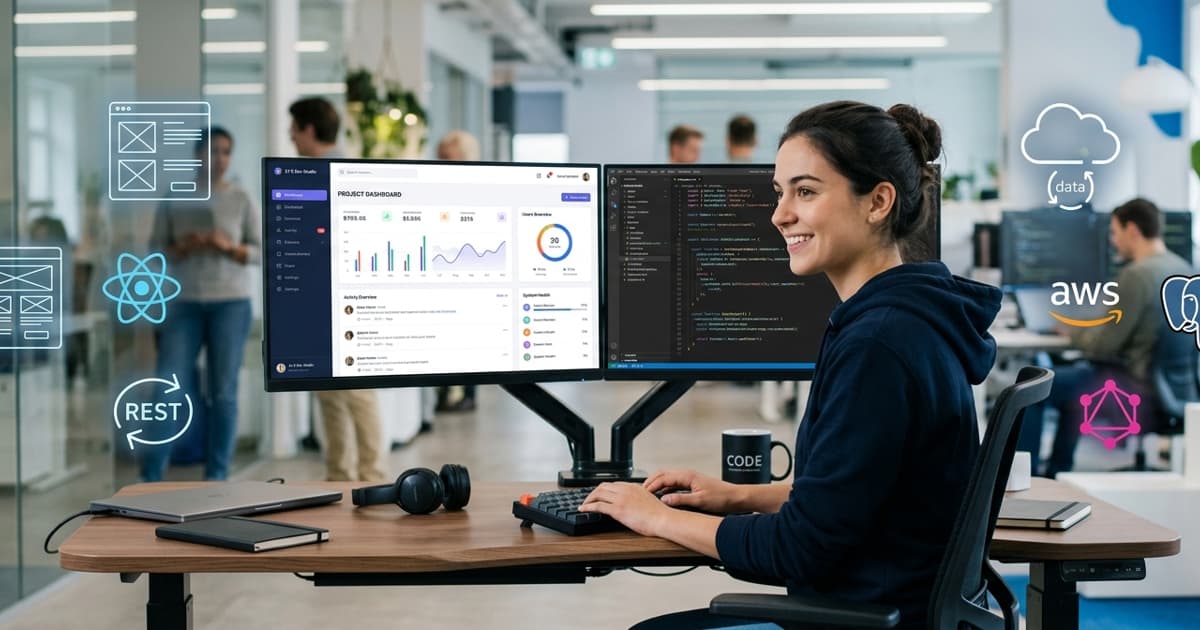
Full stack developers are trained to handle all these layers. Whether it is a React-powered front end connected to a Node.js backend or a Python-Django application with a PostgreSQL database, they move fluidly between tools. This is precisely why a quality full stack development course covers a wide range of technologies rather than focusing on just one framework or language. Employers want developers who can adapt as technology evolves, and full stack training builds exactly that kind of flexibility.
If you want to understand how to pick the right program, check out this guide on how to choose the best full stack development course that aligns with your career goals.
Cost Efficiency and Faster Project Delivery
From a business operations perspective, hiring full stack developers is simply more economical. Instead of managing and paying multiple specialists, a company can assign a single full stack developer to own an entire feature or project from concept to deployment.
This not only cuts payroll costs but also shortens project timelines. Fewer handoffs between team members mean fewer delays. For startups with limited budgets and tight deadlines, this efficiency is invaluable. Research from McKinsey has highlighted that streamlined development teams with cross-functional skills consistently outperform siloed structures in delivery speed. Graduates of a full stack developer course in Thrissur or Kochi gain a direct edge in such environments because they enter the workforce already prepared to own end-to-end development responsibilities.
How a Full Stack Developer Course Builds Career-Ready Skills
A well-structured full stack developer course in Kochi or any major tech hub does more than teach coding syntax. It equips students with problem-solving skills, project management awareness, and real-world application experience through hands-on projects.
Students learn to work with version control systems like Git, understand deployment pipelines, and build responsive, scalable applications. These are exactly the competencies hiring managers look for during technical interviews. Beyond the code, the best web app development course programs also focus on teamwork, client communication, and debugging under pressure, skills that specialists trained in just one domain often lack.
At Guiders Academy, the approach to skill development combines technical training with personality and communication coaching, helping students present themselves confidently to prospective employers. Whether you are based in Kochi or Thrissur, a full stack developer course in Thrissur from a reputed institution can set the foundation for a rewarding career in software development.
Full Stack vs Specialist: What Do Hiring Managers Actually Say?
When hiring managers at product companies and agencies are surveyed, a consistent pattern emerges. They value developers who can take ownership of a feature without needing to coordinate with multiple teams. Full stack developers bring this ownership mentality naturally because their training exposes them to every layer of the product.
Specialists are valuable in large enterprises with defined roles and separate engineering squads. However, for the majority of companies, especially those in the growth phase, a full stack developer reduces friction and accelerates delivery. If you are weighing career options, understanding the differences between web development and app development can also help you identify where full stack skills give you the strongest career leverage.
Is Now the Right Time to Enroll in a Full Stack Developer Course?
The short answer is yes. The tech industry continues to grow, and the preference for versatile, skilled developers is only increasing. Digital transformation across industries like banking, healthcare, retail, and logistics has created a sustained demand for talented web developers who understand the full development cycle.
For students in Kerala, enrolling in a full stack developer course in Kochi or a full stack developer course in Thrissur provides the advantage of world-class training within a familiar and accessible environment. Local programs that align with global tech standards give students both theoretical depth and practical experience, making them job-ready from day one.
Conclusion
Companies prefer full stack developers because they bring efficiency, versatility, and end-to-end ownership to every project. For students planning their career in tech, investing in a full stack developer course is one of the smartest moves you can make today. Whether you pursue a full stack web development course, a web app development course, or a specialized program at an institution near you, the skills you build will open doors across industries and geographies. Explore your options, choose a program that balances theory with hands-on practice, and take the first confident step toward a future-proof tech career.
Frequently Asked Questions
What is the main advantage of enrolling in a full stack developer course?

Why do companies hire full stack developers instead of specialists?
Is a full stack developer course in Kochi worth it for local students?
What technologies are typically covered in a full stack web development course?
How does a web app development course differ from a traditional programming course?
Can I find good full stack developer courses in Thrissur?
Is a full stack development course suitable for beginners with no coding background?
What career paths open up after completing a full stack developer course?
How long does it typically take to complete a full stack web development course?
What soft skills does a full stack developer course help you develop?