2027 Maritime Careers: Why Shipping & Logistics Diplomas Are Outpacing Generic MBAs
 General
India's major ports handled a record 915.17 million tonnes of cargo in FY 2025/26, according to the Ministry of Ports, Shipping and Waterways update on Sagarmala. Every one of those tonnes needs people who can plan, document and clear it. A diploma in shipping and logistics is one of the fastest ways to become one of those people. If you are weighing a two year MBA against a focused maritime qualification, talk to the Guiders admissions team before you commit. This guide sets the 2027 outlook against real hiring data. It also shows where a specialised diploma now gives job seekers a sharper edge than a generic management degree.
Key Takeaways
- A diploma in shipping and logistics prepares you for port, freight and documentation roles in about one year, while a full time MBA usually takes two.
- MBA employability fell to 72.76% in the India Skills Report 2026, as employers shifted toward applied, specialised skills.
- With Vizhinjam expanding and national maritime investment rising, a logistics management diploma course in Kerala for 2027 is a practical, job focused choice.
Why Maritime Careers Are Growing Into 2027
India's trade runs on water, and the numbers keep climbing. Port volumes, new infrastructure and government programmes all point to steady demand for trained shipping and logistics staff over the next few years.
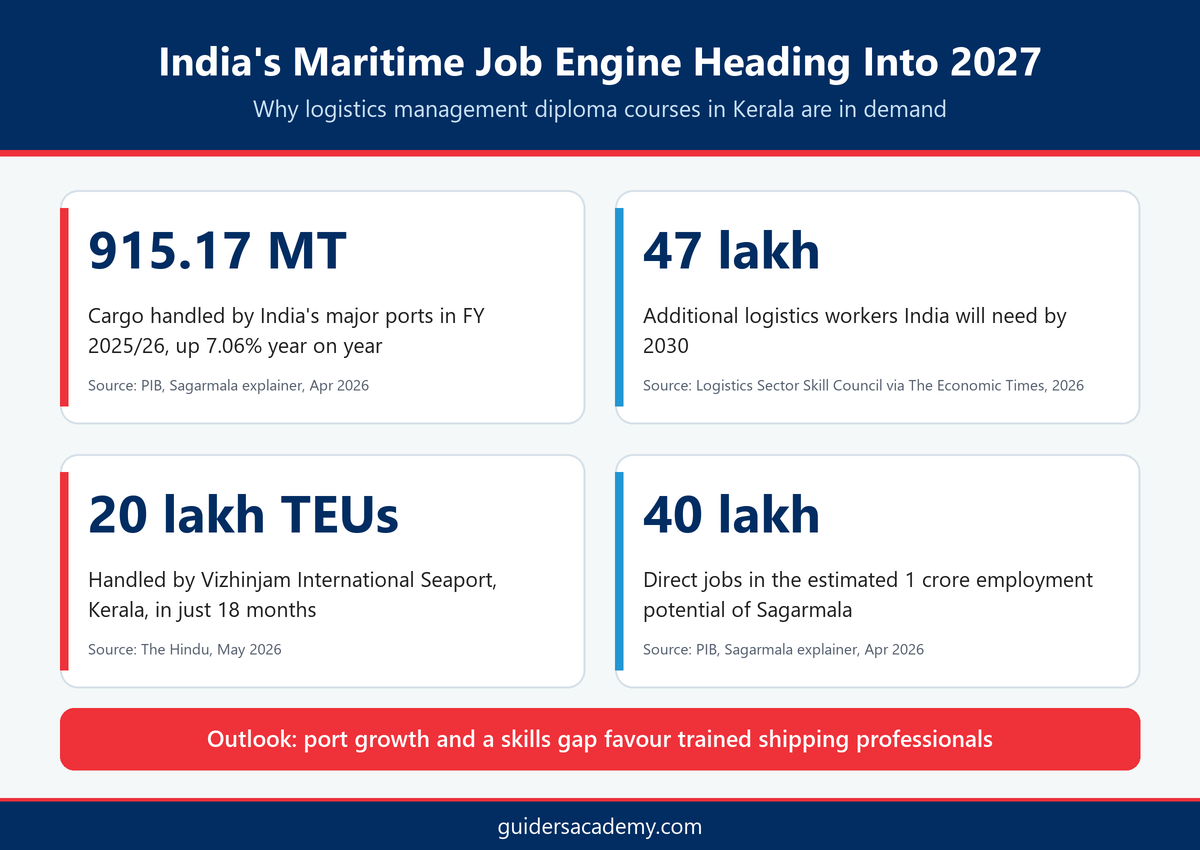
According to the PIB backgrounder on Maritime India, nearly 95% of India's trade by volume and about 70% by value moves through maritime routes. Major ports handled around 855 million tonnes in FY 2024/25. They then crossed 915 million tonnes in FY 2025/26, a year on year rise of 7.06%. The Sagarmala programme estimates a cumulative employment potential of around 1 crore jobs, including 40 lakh direct roles. Those jobs sit in port operations, cargo handling, customs coordination and freight management. Each of these areas rewards practical, process based training. That is exactly what a focused shipping diploma is built to deliver, and it explains why career planners are looking beyond classroom heavy degrees for 2027.
What does this mean for a student finishing Plus Two or a graduate thinking about a switch? It means the sector is not hiring for one short season. Port expansion, coastal shipping and inland waterways are long cycle investments. A diploma in shipping and logistics earned now lines you up for roles that should keep growing as these projects mature, rather than for jobs that may fade with a single trend.
Kerala's Port Advantage: Vizhinjam and Beyond
Kerala is no longer a quiet spectator in global shipping. The Vizhinjam International Seaport has turned the state into a live transshipment hub, and that changes the local job picture for students who train in shipping operations.
As reported by The Hindu on Vizhinjam's 2 million TEU milestone, the port handled 20 lakh TEUs in just 18 months. That is nearly twice its annual capacity. It has served over 950 vessels, including 67 Ultra Large Container Vessels. The first 400 metre berth of a 1.2 km expansion is expected in 2027. A natural draft of around 20 metres and a position just 10 nautical miles from the east west shipping route give it a lasting edge. More ship calls mean more work in documentation, cargo planning, customs liaison and terminal support. You can read our wider view of which logistics jobs are growing in Kerala for more local context.
The outlook for 2027 is simple. As berths, ship calls and cargo volumes grow, shipping lines, freight forwarders, customs brokers and warehouse operators will need staff who already understand port processes. Students who train close to home in Kochi or Thrissur can build those skills without leaving the state, then apply to employers who serve Kerala's ports as well as hubs across India and the Gulf.
Diploma vs Generic MBA: What Employers Now Reward
The MBA still has value, but a general management degree no longer guarantees a job. Recruiters increasingly want people who can do a specific task on day one, and shipping is a sector where that skill gap is easy to see.
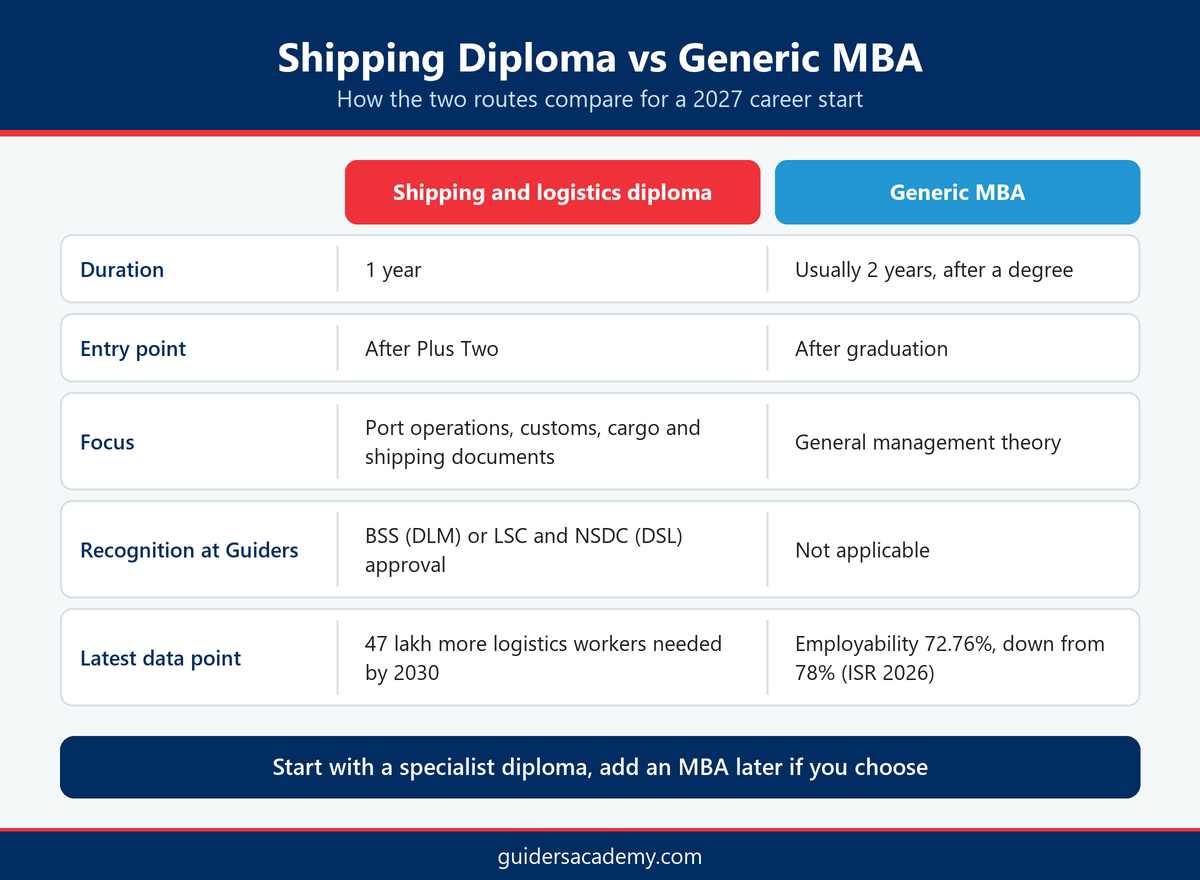
The India Skills Report 2026, summarised by Careers360's coverage of the report, shows MBA employability dropping to 72.76% from 78% in 2025. The report links this to a shift toward applied, cross domain expertise. Globally, the World Economic Forum Future of Jobs Report 2025 says employers expect 39% of workers' core skills to change by 2030. It also projects that trade restrictions and geopolitical shifts will drive growth for Supply Chain and Logistics Specialists. A shipping diploma teaches sea port operations, customs interface, pre and post shipment documentation, cargo operations and Dangerous Goods Regulations. Those are practical tasks that shipping employers need covered from day one. It also opens after Plus Two, so you start earning while MBA aspirants are still studying.
Time is the other big difference. A general MBA normally needs a completed degree plus two more years of study before you apply for your first management role. A diploma in shipping and logistics takes one year after Plus Two. That leaves you with real industry experience by the time many of your peers are only finishing their postgraduate course. Many professionals choose to add an MBA later, once they know which side of the industry they enjoy most.
The 2027 Talent Gap Is Your Opening
Demand is running ahead of supply. Industry bodies are openly warning that India will not have enough trained logistics workers unless skilling scales up quickly, which puts certified candidates in a strong position.
The Logistics Sector Skill Council told The Economic Times that India needs 47 lakh additional logistics workers by 2030. The demand comes from growth in freight, warehousing and transportation. The council also reported 10.8% net employment growth in the sector in the second half of 2025. For a student searching for a shipping career course near me in India, that gap is the real opportunity. Typical entry roles include shipping executive, documentation assistant, operations executive and warehouse executive. Guiders alumni have started careers with companies such as Hastenway Shipping, TVS Logistics, CPS Logistics and Beta Exim Logistics, as shared on our student placements page. Certified, practically trained candidates are the ones who move first when those vacancies open.
Employers in this space look for a clear set of strengths. They want accuracy with shipping documents, a working knowledge of customs and port procedures, comfort with computers, and confident communication with clients and carriers. These are teachable skills, and a structured course with practical training builds them far faster than learning by trial and error on the job.
Choosing the Right Shipping Programme at Guiders
Not every course gives you the same recognition or depth. Before you enrol, check the approval body, the syllabus and how much practical training is included, because these decide how employers read your certificate.
Guiders Education runs two one year diplomas for students who have completed Plus Two. Our one year Shipping and Logistics Management programme (DLM) is approved by BSS with validation and certification. The DSL programme approved by LSC and NSDC carries Logistics Sector Skill Council approval. Both cover fundamentals of shipping, multimodal transportation, professional ship management and the legal aspects of shipping. Classes run at our Kochi and Thrissur campuses, with practical training built into the course structure. Qualified students receive 100% placement assistance with leading companies across India and abroad. You can compare every option on our logistics and supply chain courses page before choosing.
When you visit any institute, ask four direct questions. Who approves the certificate? How many hours go into practical training? Which companies have hired recent students? What support do you get with interviews and documents? Clear, specific answers to these questions are a good sign that a course will prepare you for real work, not just an exam.
Conclusion
Maritime trade is growing, Kerala now hosts a world class transshipment port, and employers are rewarding specific, applied skills over general management theory. A diploma in shipping and logistics lets you enter this market in about a year, with skills that map directly to real vacancies. The MBA remains an option later in your career, once you have industry experience behind you. If you want to be job ready for the 2027 hiring cycle, now is the time to act. Get in touch with our Kochi or Thrissur campus and find the shipping programme that fits your goals.
Frequently Asked Questions
What is a diploma in shipping and logistics?

Is a shipping diploma better than an MBA in 2027?
Who can join the shipping and logistics diploma at Guiders?
How long does a logistics management diploma course in Kerala take?
What jobs can I get after a shipping and logistics course?
Is there real demand for logistics professionals in India?
How does Vizhinjam port affect shipping careers in Kerala?
Which approvals do Guiders shipping diplomas carry?
Where can I find a shipping career course near me in India?
Does Guiders offer placement support after the diploma?