Java Spring Boot Full Stack Course in Kochi: A Guide
 General
A Java Spring Boot course in Kochi is one of the more dependable paths into enterprise software development, since Java and Spring Boot still power a large share of banking, insurance, and large scale business applications. This guide covers why Java remains relevant, what a genuine full stack Spring Boot curriculum should include, what you can expect to earn, and how to evaluate a training institute before you enroll.
Key Takeaways
- Java and Spring Boot remain the backbone of enterprise software, particularly in banking, insurance, and large scale business systems.
- A strong Java Spring Boot course covers core Java, the Spring Boot framework, REST APIs, database integration, and a frontend layer, not Java syntax alone.
- Kochi's IT parks host many service companies and delivery centers that specifically hire for Java and Spring Boot skills.
Why Java and Spring Boot Still Matter
Java has been a dominant enterprise language for over two decades, and Spring Boot, built on top of the wider Spring framework, has become the default way most companies build Java based backend services today.
Spring Boot strips away a lot of the configuration overhead that older Java frameworks required, letting developers get a working service running in minutes rather than days. This stability is exactly why large, risk averse industries like banking, insurance, and logistics continue to build on Java.
According to Oracle, Java remains one of the most widely deployed languages across enterprise systems globally, which translates into consistent, long term hiring demand rather than the boom and bust cycles seen in some newer frameworks.
Java's strict typing and mature tooling also mean large codebases stay easier to navigate and refactor safely as they grow, which is a big part of why enterprise teams with dozens of engineers working on the same system continue to prefer it over looser, dynamically typed alternatives.
What a Full Stack Spring Boot Course Should Cover
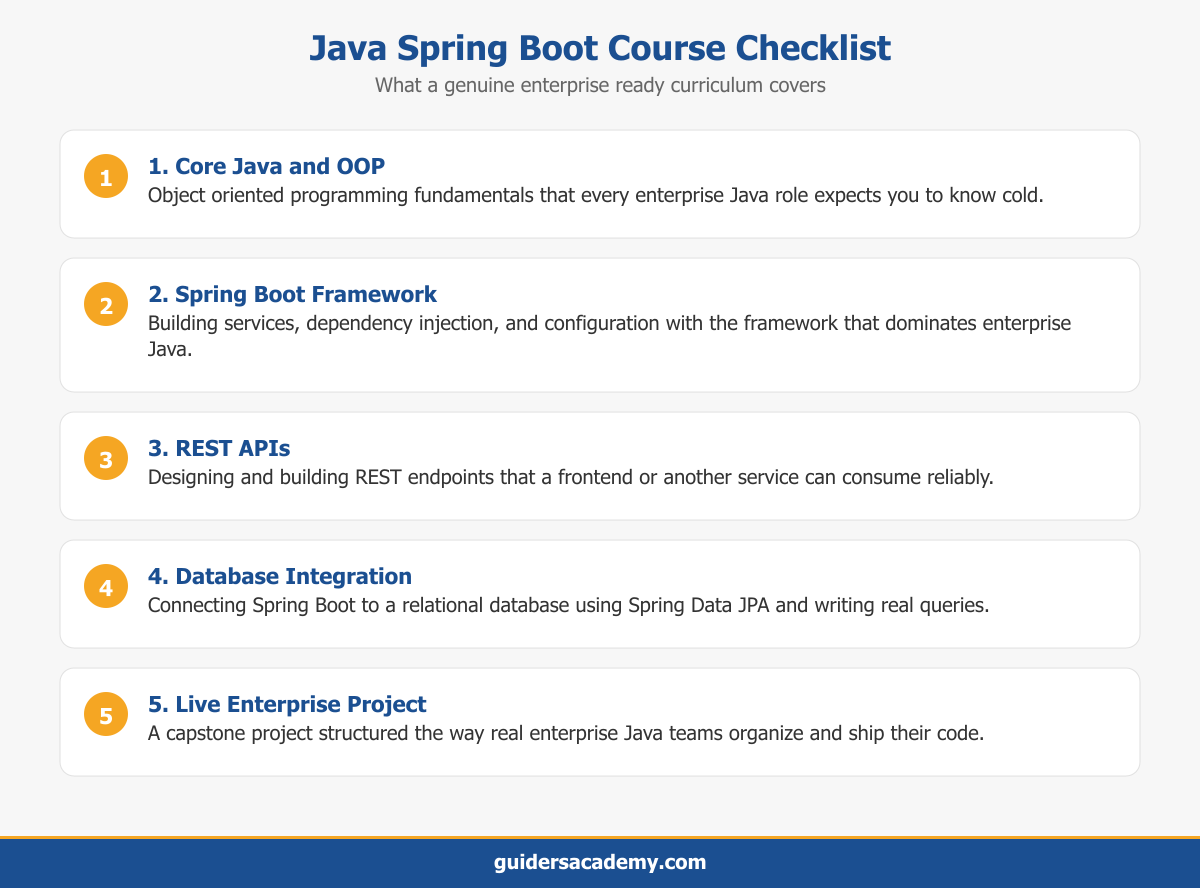
A serious course starts with core Java and object oriented programming, since Spring Boot assumes you are already comfortable with classes, interfaces, and Java's type system.
From there, it should move into Spring Boot itself: dependency injection, building REST controllers, and configuring an application without needing to hand write large XML configuration files the way older Java frameworks required.
Beyond the framework basics, look for database integration using Spring Data JPA, testing practices, and at least one unit on connecting a frontend, whether that is a simple server rendered page or a separate React application talking to your Spring Boot API. A course that treats the backend as the entire product, with no attention to how it connects to a real interface, will leave you underprepared for how most teams actually work.
Salary Expectations for Spring Boot Developers in Kochi
Java and Spring Boot developers are generally well compensated relative to other entry level tech roles in Kerala, given the steady enterprise demand that keeps hiring active even during slower years for consumer facing startups.
Entry level developers at Kochi's service companies and MNC delivery centers typically start in a solid junior developer band, with clear, visible salary jumps at the two and four year marks as engineers take on API design, system architecture, or team lead responsibilities.
Developers who add cloud platform experience, such as basic AWS or Azure deployment skills, alongside their core Spring Boot training tend to be offered a meaningful premium over peers who only know the framework itself, since most enterprise teams now expect at least some familiarity with cloud hosted infrastructure.
Building an Enterprise Style Portfolio Project
Enterprise hiring managers respond well to projects that look like real business systems rather than toy applications. An inventory management system, a simple banking or ledger style application, or an employee management tool with role based access are all realistic choices that mirror the kind of work Java developers actually get hired to do.
What matters most is structure. Being able to explain your package organization, how you separated your service and repository layers, and how you handled validation and error responses shows an interviewer that you understand enterprise patterns, not just Spring Boot syntax.
Career Paths and Demand in Kochi
Kochi's IT parks, particularly Infopark and SmartCity, host a significant number of service companies and MNC delivery centers that specifically hire Java developers to maintain and build enterprise systems for global clients.
This kind of demand tends to be steadier than trend driven hiring in newer frameworks, since large enterprise clients rarely rewrite their core systems in a completely different language every few years.
A typical path starts as a junior Java or Spring Boot developer, then moves toward backend or API architecture roles, and eventually toward technical lead or systems design positions for developers who stay in the enterprise Java ecosystem long term.
Choosing the Right Training Institute
Ask any institute offering a web development course in Kochi with a Java Spring Boot track to show you the structure of their capstone project and how closely it mirrors real enterprise codebases, not just a simple to do list app relabeled as "enterprise ready."
Also check the institute's placement support and published student outcomes directly, since enterprise focused hiring often runs through a smaller, more specific set of companies than general web development roles, and a good institute should be able to name them.
Conclusion
A Java Spring Boot course in Kochi remains one of the steadier routes into enterprise software careers, provided the curriculum goes beyond core Java into real Spring Boot, database, and API work with a genuine enterprise style project and clear salary expectations set from day one.
To see how Guiders structures its full stack and app development program, explore the course page or get in touch with the team to plan your training path.
Frequently Asked Questions
Is Java Spring Boot still in demand in 2026?

Do I need to know Java before a Spring Boot course?
How long does a Java Spring Boot full stack course take?
What jobs can I get after a Java Spring Boot course in Kochi?
Is Spring Boot harder to learn than Node.js or Django?
Does a Spring Boot course include frontend training?
What database is commonly used with Spring Boot?
Are Java developers paid well in Kerala?
Does Guiders Academy provide placement support for this course?
Where can I learn more about Guiders Academy as an institute?