Essential Skills You Need to Become a Full Stack Developer
 General
Introduction
The demand for full stack developers is growing rapidly across the globe. Companies of all sizes want professionals who can handle both the front end and the back end of web applications. If you are a student or someone planning a career change, knowing which skills to build is the essential first step. Enrolling in a full stack developer course gives you a structured path to master all the tools and technologies needed. This blog outlines the core technical and professional skills every aspiring developer needs to launch a successful career in web development.
Key Takeaways
Full stack developers work on both the frontend (user interface) and the backend (server and database) of web applications.
Essential skills include HTML, CSS, JavaScript, a backend language, database management, and version control.
A full stack developer course for beginners provides a structured, step-by-step learning path from basics to job-ready skills.
What Does Full Stack Development Actually Mean?
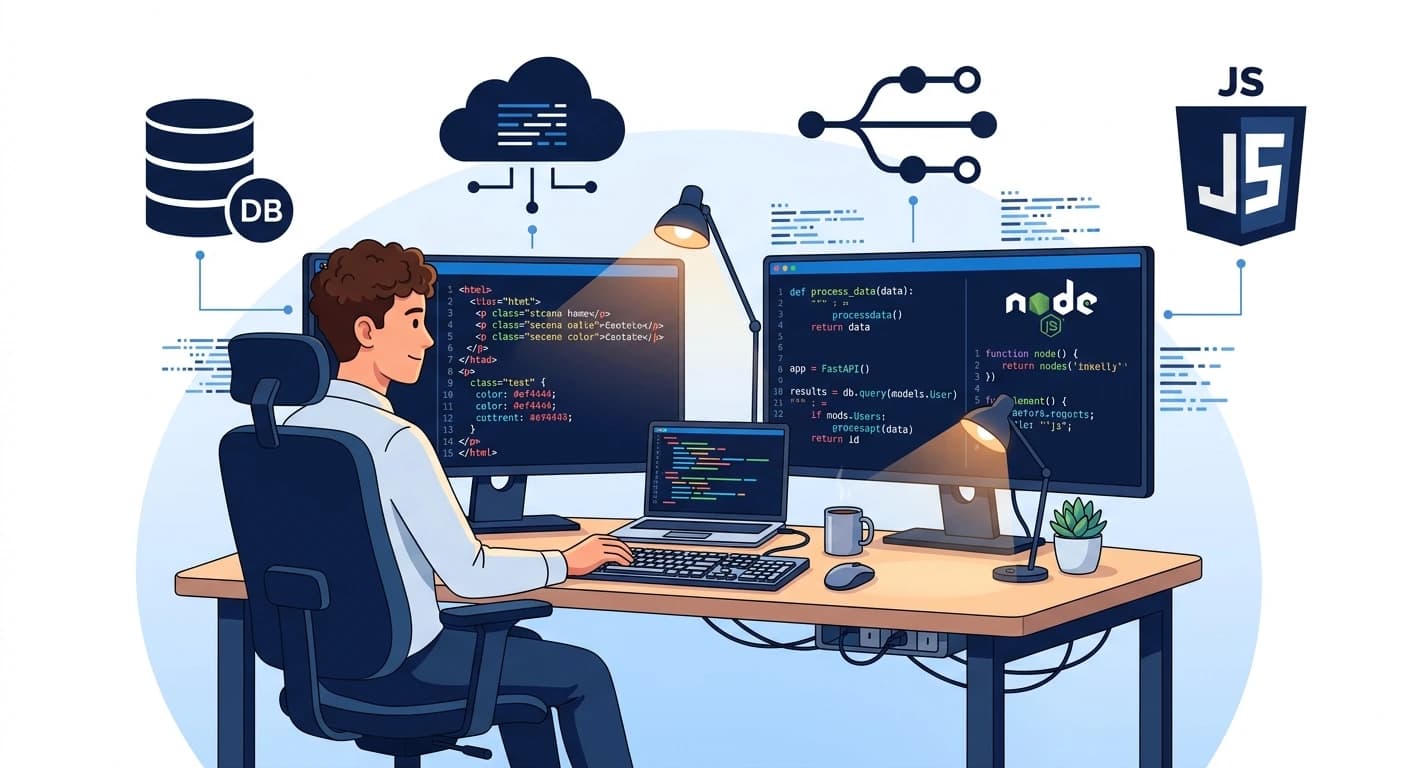
Full stack development is the practice of building every layer of a web application, from the visual interface users interact with, to the server-side logic and database that power it behind the scenes.
Most web applications have two sides: the frontend and the backend. The frontend is everything a user sees and interacts with on a website. The backend manages data, processes requests, and handles the logic that makes the application function. Full stack developers are skilled in both areas, which is why they are among the most sought-after professionals in the technology sector. According to the Stack Overflow Developer Survey, full stack developers consistently rank among the most common and in-demand job roles worldwide. For beginners, starting with a web development course for beginners provides the clearest entry point into this field and helps you understand how both sides of development connect. Guiders Academy offers programs that cover the complete development stack, giving students a thorough understanding from day one.
Frontend Skills Every Developer Needs
Mastering HTML, CSS, and JavaScript forms the foundation of any full stack developer's skill set. These three technologies control everything users see, from the structure of a page to its visual design and interactive behavior.
HTML gives structure and meaning to web content. CSS controls how that content looks, including fonts, colors, layout, and spacing. JavaScript adds dynamic behavior, such as dropdown menus, form validation, and real-time content updates. Together, they form the complete picture of what a user experiences in a browser. Beyond these basics, modern frontend frameworks like React, Angular, and Vue.js are widely used to build fast and scalable user interfaces. Responsive design is another must-have skill, ensuring applications look professional on mobile phones, tablets, and desktops alike. A quality full stack web development course will cover all of these frontend fundamentals along with industry-standard tools and workflows that developers use daily in real projects.
Backend and Database Skills
The backend is the engine that drives every web application. It handles data storage, user authentication, server communication, and the logic that processes user requests.
Common backend languages include Python, Node.js, PHP, and Java. Each has its strengths, but Node.js is especially popular in full stack development because it uses JavaScript on both the frontend and the backend, reducing the number of languages a developer needs to learn. You also need to understand RESTful APIs, which are the bridges that allow the frontend and backend to communicate with each other. Database management is equally important. Relational databases like MySQL and PostgreSQL use structured tables, while NoSQL databases like MongoDB offer a more flexible data format. A structured full stack development course will walk you through these backend concepts step by step, ensuring you can build secure, data-driven web applications that work reliably at scale.
Version Control and Developer Tools
Git is the industry-standard version control system. Knowing how to use Git and platforms like GitHub is a baseline requirement for nearly every developer role in the world today.
Version control allows developers to track every change made to a codebase, collaborate with team members without overwriting each other's work, and revert to earlier versions if something breaks. Beyond Git, developers need to be comfortable with the command line interface, code editors like Visual Studio Code, and package managers like npm or Yarn. Understanding deployment workflows and cloud hosting platforms such as AWS, Heroku, or Netlify allows you to publish your applications live on the internet. These tools and workflows are covered in most quality full stack developer courses for beginners, and mastering them is what separates a student who can code from a professional who can deliver. Guiders Academy's web and app development programs include hands-on training with these tools as part of the curriculum.
Soft Skills That Set You Apart
Technical ability is necessary, but it is not sufficient on its own. Employers look for developers who can communicate clearly, collaborate in teams, think creatively when problems arise, and deliver work reliably on time.
The ability to understand a client's requirements, break them into logical tasks, and build a solution that actually meets the brief is what distinguishes great developers from average ones. Time management, attention to detail, and the ability to ask the right questions are equally valued in professional environments. As more companies shift to remote and hybrid setups, clear written and verbal communication becomes even more critical. Many career switchers who explored booming opportunities have found that their soft skills from previous roles became an unexpected advantage in tech. If you are considering a career switch in 2026, pairing strong soft skills with a solid development foundation gives you a genuine edge in the job market.
Conclusion
Full stack development is one of the most rewarding career paths available today. By building skills across HTML, CSS, JavaScript, backend development, databases, and version control, you prepare yourself for strong and growing opportunities across every industry. Soft skills and professional tools round out your profile and make you a confident, hire-ready candidate. The most effective way to start is by enrolling in a full stack development course that combines structured theory with real-world project experience. Guiders Academy provides exactly this kind of practical, industry-aligned training. Take the first step today and start building a career you can be proud of in web development.
Frequently Asked Questions
What does a full stack developer do?

What is the difference between frontend and backend development?
How long does it take to learn full stack web development?
Is a full stack developer course for beginners suitable for non-tech students?
What programming languages should a full stack developer know?
Do full stack developers need design skills?
What is the average salary of a full stack developer in India?
What tools do full stack developers use daily?
Can I learn full stack development online?
Why is full stack development a good career choice in 2026?