Diploma in Airline and Airport Management: A Complete Guide
 General
Choosing a diploma in airline and airport management is one of the fastest ways to enter Kerala's growing aviation sector without committing to a full three year degree. With Cochin International Airport and a rising number of regional carriers hiring locally, employers want job ready skills, not just classroom theory. This guide walks you through what the course actually covers, who should apply, how long it takes, and where it can lead your career. You will also learn why an IATA certified aviation course adds real weight to your resume when you start applying for airport and airline roles.
Key Takeaways
This aviation diploma typically takes six to twelve months and suits both fresh school leavers and graduates seeking a career change.
The strongest programs pair an airport management course with IATA certified modules such as Galileo GDS, ticketing, and ground handling procedures.
Studying for an airline management diploma in Kerala, particularly around Kochi and Thrissur, gives students direct access to airport, airline, and ground handling employers.
What Is a Diploma in Airline and Airport Management?
This program is a short, industry focused course that trains students for front line and operational roles across airports and airlines. Unlike a general degree, it concentrates on aviation specific skills that employers actually test for at interview.
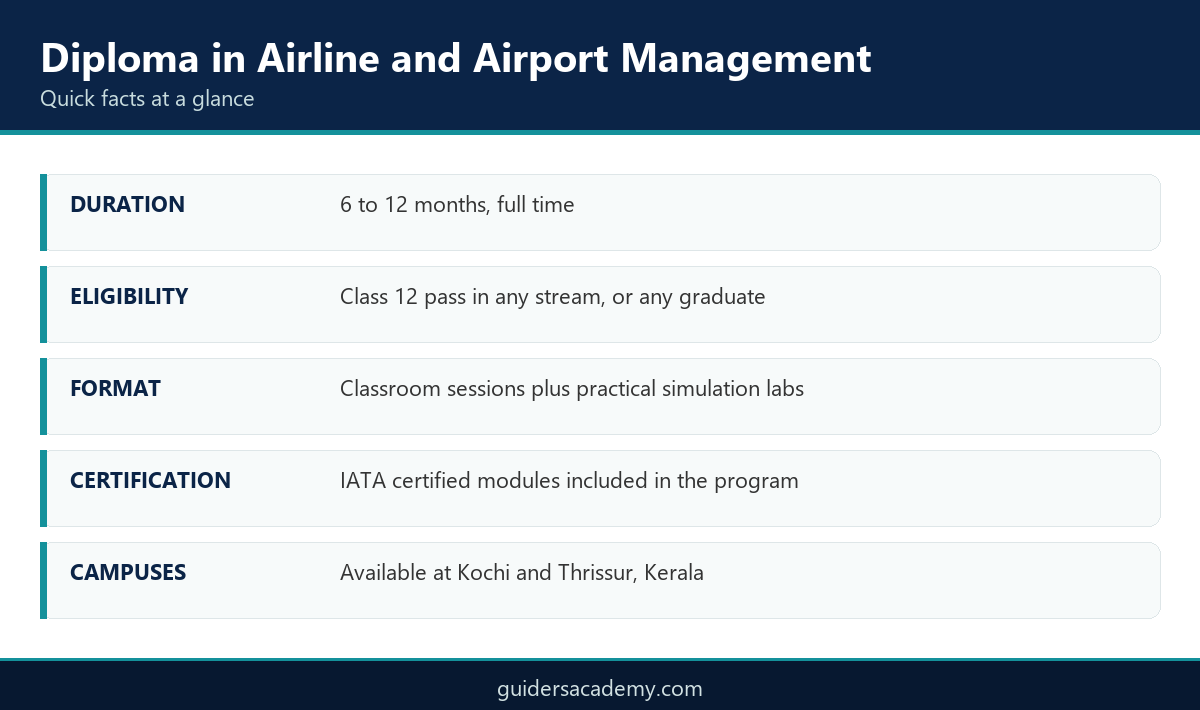
Most programs run between six and twelve months, making them a practical choice for students who want to start working sooner rather than later. Guiders Academy's diploma in airline and airport management covers passenger handling, airport operations, baggage and cargo procedures, and customer service standards used across Indian and Gulf carriers. Classes mix classroom instruction with simulated check in counters and mock interview sessions, so students grow comfortable with the pace of a real airport floor before they ever apply for a job.
This format suits two groups well. School leavers who want a direct route into aviation without a three year commitment, and graduates from unrelated fields who need focused retraining. Because the diploma is shorter and more targeted than a full aviation degree, students often start applying for entry level airport and airline roles within months of completing the program.
Small batch sizes are common in strong programs, since airline and airport training relies heavily on practice rather than lectures. Faculty with real industry background can walk students through grooming standards, communication drills, and situational judgement exercises that a textbook alone cannot teach.
Curriculum and Core Modules Covered
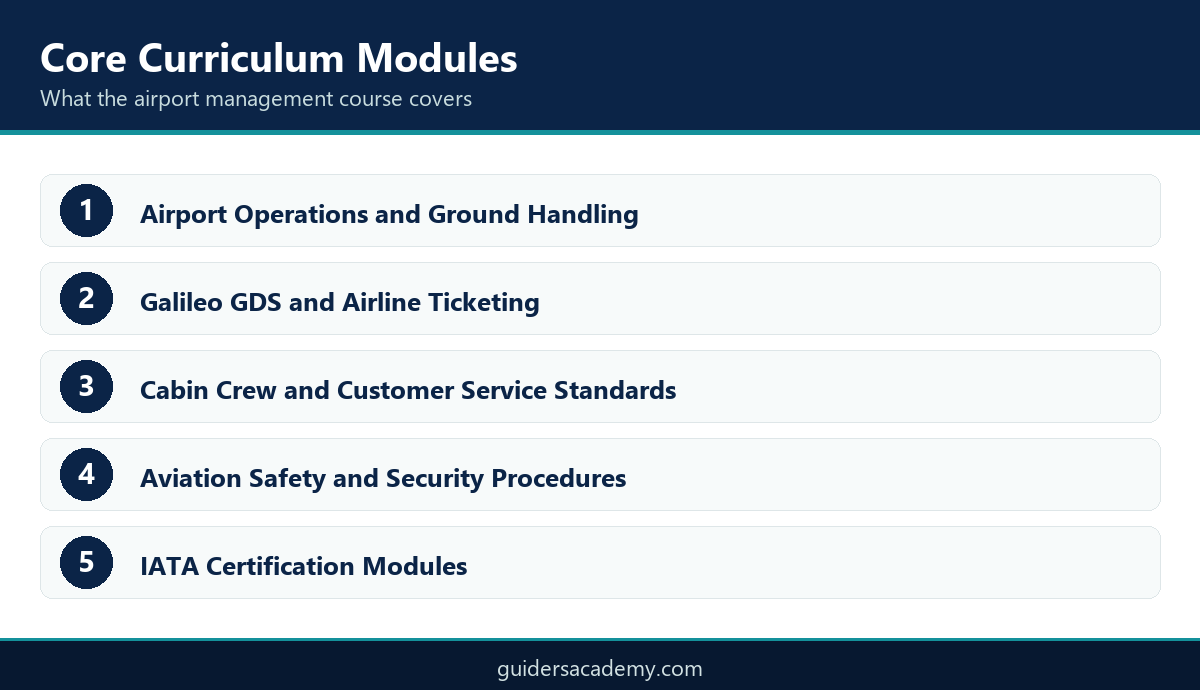
The curriculum for an airport management course typically blends theory with hands on practice, so graduates arrive at their first job already familiar with airline systems. Guiders Academy structures its program around five core areas: airport operations, Galileo GDS and ticketing, cabin crew grooming and service standards, aviation safety and security, and dedicated IATA certification modules.
The Galileo GDS module deserves special mention. It trains students on the global distribution system airlines and travel agents use for bookings, fares, and itinerary changes, a skill that is difficult to pick up outside a structured classroom. Aviation safety training covers security screening protocols, emergency procedures, and the regulatory standards that govern day to day airport operations.
Students who complete the IATA certified track graduate with credentials recognised across the airline industry, which strengthens applications to international carriers and ground handling companies. You can review detailed module breakdowns on the IATA Courses page. These modules follow standards set by the International Air Transport Association, the global body that governs airline ticketing, safety, and operational procedures worldwide.
Beyond technical modules, most programs also build soft skills such as grooming, spoken English, and conflict resolution, since airport and airline staff deal directly with passengers under time pressure. These sessions often include role play exercises modelled on real check in and boarding scenarios.
Eligibility, Duration, and Admission Process
Eligibility for this diploma is straightforward. Most institutes, including Guiders Academy, accept students who have passed class 12 in any stream, along with graduates from any discipline who want a faster route into aviation. There is no strict age cutoff, which makes the course accessible to working professionals looking for a career shift.
Duration typically ranges from six months to a year, depending on whether the program includes additional IATA certification tracks. Admission usually involves a short application, a review of academic records, and in some cases a personal interview or aptitude check to assess communication skills, since most airline and airport roles are customer facing.
Fees vary by institute and by how many certification modules are bundled into the course. Before enrolling, ask about placement support, practical lab access, and whether the airport management course includes live industry exposure such as site visits or internships. Guiders Academy's admissions team can walk you through eligibility, fees, and start dates. You can contact Guiders Academy directly to confirm current intake schedules for the Kochi and Thrissur campuses.
New batches typically open several times a year, so students rarely wait long between deciding to apply and starting classes. Early applicants also get first access to limited practical lab slots and scheduling that fits around part time work or other commitments.
Career Paths and Placement Opportunities After the Diploma
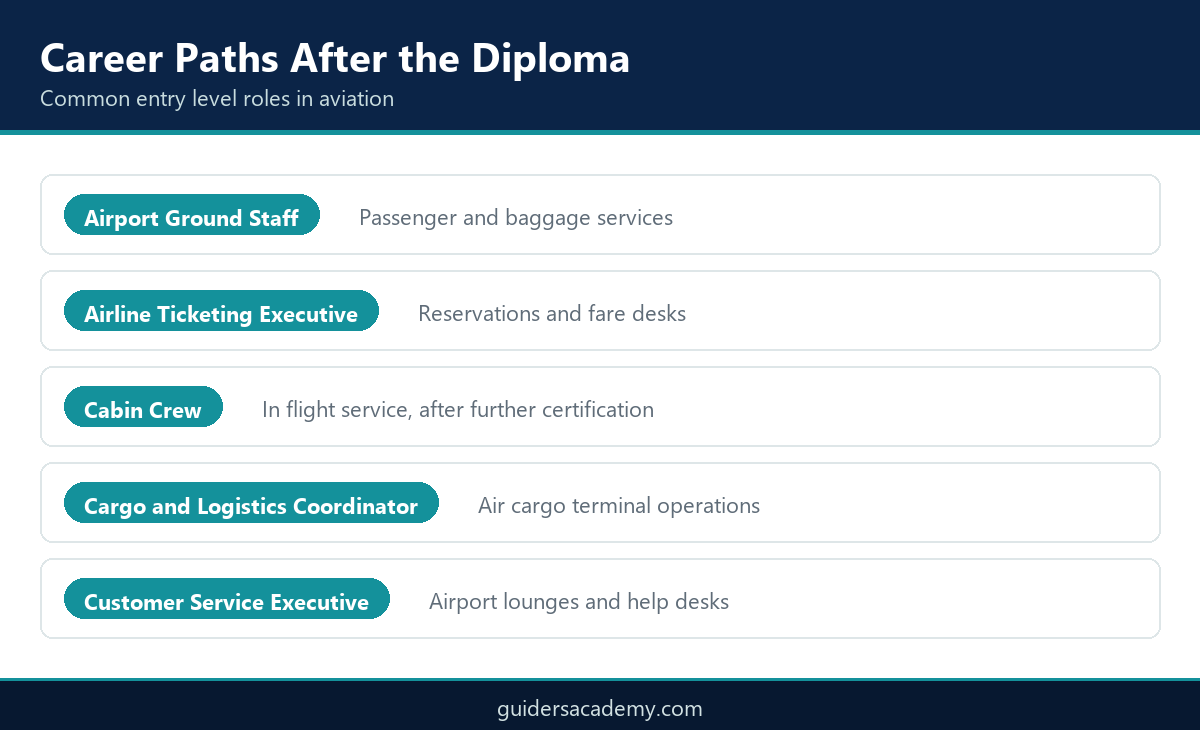
This diploma opens doors across several operational roles in aviation. Common starting positions include airport ground staff, airline ticketing executive, customer service executive, and cargo or logistics coordinator, all of which value practical training over long academic credentials.
Airports themselves are major recruiters. Facilities such as Cochin International Airport regularly need ground handling staff, security coordinators, and passenger service agents, and diploma holders with IATA certified training are well positioned for these openings. Airlines, travel agencies, and cargo handling companies also hire diploma graduates directly into entry level operational roles.
Placement support makes a real difference here. Guiders Academy works with airline, airport, and travel industry partners to connect graduates with interview opportunities soon after they complete the program. Review real outcomes and hiring partners on the Placements page to see where recent graduates have started their careers. With demand for trained airport and airline staff rising across Kerala and the Gulf, this diploma remains one of the more direct paths into aviation employment.
Salaries at entry level are modest but grow steadily with experience, especially for staff who add supervisory training or extra certifications after their first year on the job. Many graduates use their first airport or airline role as a stepping stone toward specialised aviation careers.
Why Choose an IATA Certified Program in Kerala
Not every institute offering an airline management diploma in Kerala provides the same depth of training. The strongest programs combine IATA certified coursework with practical labs, experienced faculty, and genuine placement support rather than just classroom lectures.
Guiders Academy has built its reputation around this combination. The institute runs its diploma programs from both Kochi and Thrissur, giving students in central and southern Kerala access to industry aligned training without relocating far from home. Learn more about the institute's approach, faculty, and accreditations on the About Us page.
Choosing a course with recognised IATA certification, structured practical training, and a track record of placements matters more than choosing the cheapest option. For students serious about a long term aviation career, an IATA certified aviation course backed by real placement outcomes offers a stronger foundation than a generic diploma.
Speaking with current students or recent graduates before enrolling is also worthwhile. Their firsthand experience with faculty, lab facilities, and actual placement drives usually reveals more than a course brochure ever can.
Conclusion
A diploma in airline and airport management gives students a fast, practical route into one of Kerala's fastest growing industries. From curriculum and eligibility to career paths and placement support, this guide has covered what to expect before you enrol. If you are ready to start, explore Guiders Academy's aviation programs across Kochi and Thrissur, or speak with the admissions team about eligibility, fees, and upcoming batches. Call +91 9061566156 or contact Guiders Academy today to take the next step toward a career in airport and airline operations.
Frequently Asked Questions
What is a diploma in airline and airport management?

Who is eligible for an airport management course?
How long does an airline management diploma in Kerala take to complete?
What jobs can you get after a diploma in airline and airport management?
Is IATA certification necessary for airport and airline jobs?
What is the difference between an airport management course and a full aviation degree?
Which cities in Kerala offer this diploma?
Does the diploma include placement support?
What salary can a diploma holder expect in an entry level airport job?
Where can I learn more about Guiders Academy's aviation programs?