Accounting Jobs in Kerala 2026: Roles That Are Growing
 General
Discussion of accounting jobs in Kerala 2026 tends to split between anxiety about automation and reassurance that accountants will always be needed. Neither is useful to someone choosing a course. This piece works through what has actually changed in the work, which categories of role are growing against those that are shrinking, how pay is structured across the paths available here, and the specific capabilities that decide who advances. Where figures are not verifiable, that is stated rather than filled in with an estimate.
Key Takeaways
- Automation removed data entry volume rather than accounting roles, and shifted the work toward review, exception handling and advice.
- Compliance, management reporting, and finance roles inside shared service centres are the categories growing most consistently.
- Kerala's outward migration means a significant share of graduates target Gulf employers, which changes which skills are worth building.
- The people advancing fastest combine software fluency, statutory confidence and the ability to explain figures to non specialists.
What Automation Actually Changed
The volume of manual data entry has genuinely fallen. Bank feeds, automated invoice capture, and integrated systems now handle a large share of the transaction recording that occupied junior accountants for most of the previous decade.
That did not remove the roles, it changed what fills the day. The time released goes into reviewing what the system produced, investigating exceptions, and correcting the classification errors that automated capture reliably introduces at the margins.
Statutory processes moved online at the same time. Returns are filed through the GST portal and the income tax filing system, which made the compliance calendar tighter rather than lighter for most finance teams.
Reconciliation has become the defining junior skill rather than posting. Matching automated records against bank statements, supplier accounts, and statutory filings is where errors surface, and it requires judgement that software has not replaced.
The advisory share of the work has grown as a result. Business owners who once wanted their books written up now want to know what the numbers mean, which is a different conversation and a more valuable one to be able to hold.
This is why the anxiety is misplaced but the complacency is too. Someone whose only skill is data entry is genuinely exposed, while someone who can review, reconcile, and explain has more work available than before.
Anyone entering the accounting programme at Guiders Education should therefore train for the reviewing and advisory layer rather than for the recording layer that software now largely handles on its own. The honest version of that debate is in this look at the profession in the AI era.
Which Roles Are Growing and Which Are Not
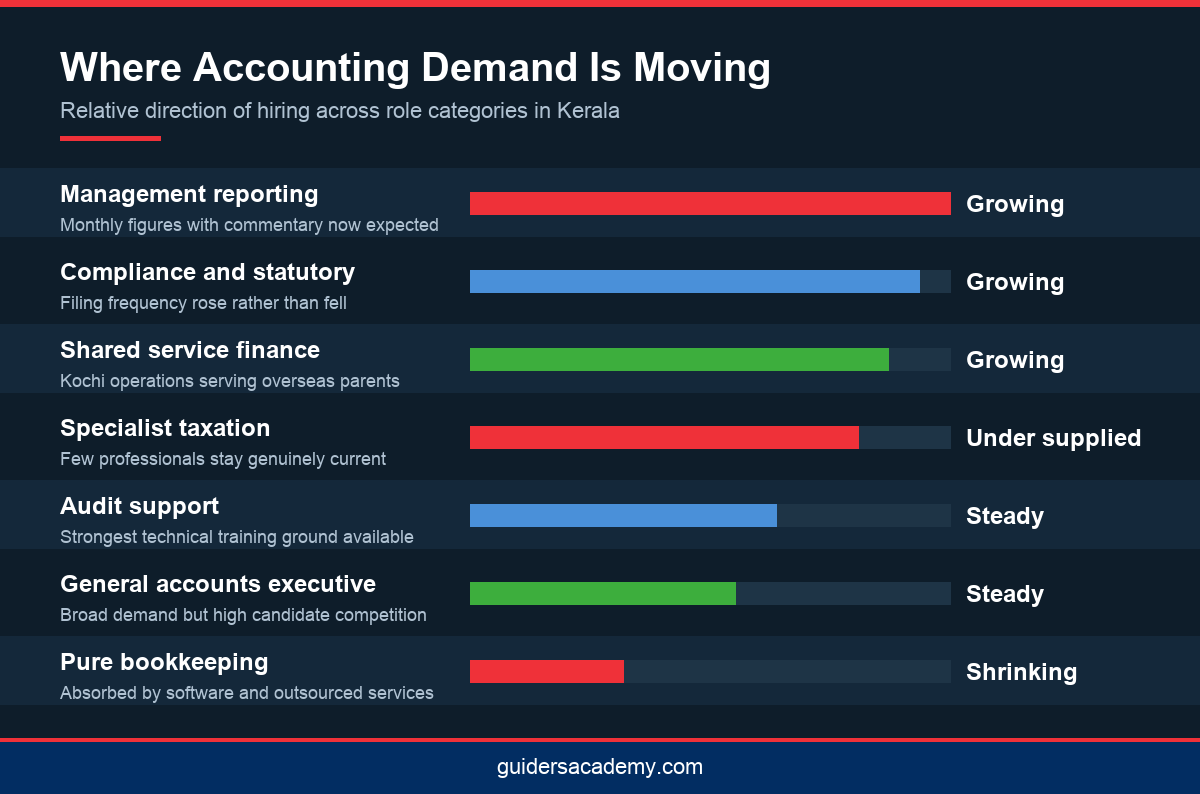
Compliance and statutory roles are growing steadily. Regulatory complexity has not reduced, filing frequency has increased in several areas, and businesses consistently need people who can manage a calendar of obligations without supervision.
Management reporting and analysis is the clearest growth area. Businesses that previously received annual accounts now expect monthly figures with commentary, and preparing that well requires understanding the operation rather than only the ledger.
Shared service and outsourced finance work has expanded meaningfully in the state. Kochi hosts finance operations serving overseas parents, and these employers hire in volume for roles that are more structured than traditional practice work.
Audit support remains steady rather than growing. Practices continue to recruit, technology has changed the testing approach more than the headcount, and it stays one of the strongest technical training grounds available locally.
Pure bookkeeping roles are the category actually shrinking. Small businesses increasingly buy this as a service or run it themselves through software, which compresses demand for people whose only capability is recording transactions.
Specialist taxation continues to be under supplied. Rules change frequently, few professionals stay genuinely current, and businesses across Kerala pay for reliable advice because the cost of getting it wrong is considerably higher.
The full range of destinations is wider than most graduates assume, as set out in this overview of accounting courses in Kerala and where they lead.
Sector concentration is worth noting as well. Healthcare groups, educational trusts, construction firms, and cooperative institutions across Kerala all maintain finance teams, and these employers frequently offer faster responsibility than a small practice can at the same experience level. Compliance-heavy roles lean on the software covered in practical Tally training.
How Pay and Progression Are Structured
This article does not quote salary figures, because verified current Kerala data was not available and published ranges vary so widely that a single number would mislead more than it would inform anyone making a decision.
What can be described is the structure. Entry level accounting pay sits alongside other graduate office roles locally, and the meaningful change arrives at the first supervisory step rather than through annual increments within the same grade.
The second structural point is that qualification and responsibility drive pay more than tenure does. Someone who owns a statutory calendar or a reporting pack independently is valued differently from someone doing the same task under supervision.
Practice and industry pay differently across a career. Practice tends to pay less early and offers structured progression, while industry pays more at comparable experience but with less predictable advancement between grades.
The Gulf comparison changes the picture again. Packages there combine salary with allowances, and Kerala's established recruitment channels mean a significant share of experienced accountants from this state eventually work abroad for part of their career.
Sector matters too. Finance functions inside larger organisations, shared service centres, and multinational subsidiaries pay differently from small local practices, and choosing the sector deliberately affects earnings more than negotiating within one does.
The route through further qualification is well established, as this overview of accounting courses after a BCom describes for graduates deciding what to add and when.
Timing of a move matters as much as the destination. Changing employer at the two and four year marks is where most of the pay progression in this profession actually happens, because internal increments rarely match what the external market will offer.
The Capabilities That Decide Who Advances
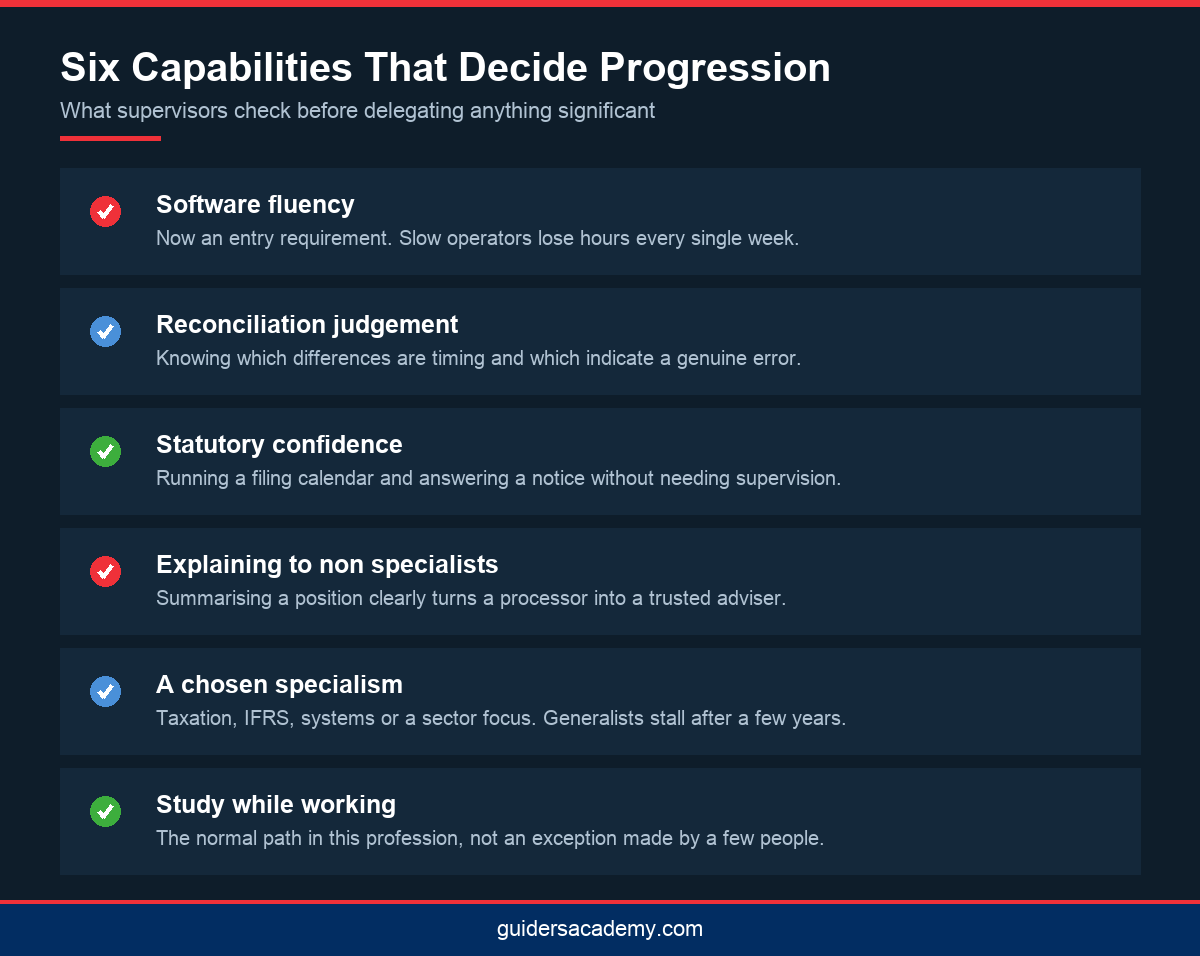
Software fluency is the entry requirement rather than a differentiator now. Accounting packages, spreadsheets, and the statutory portals are used daily, and slow operators lose hours every week that faster colleagues spend on more valuable work.
Reconciliation judgement is the first real differentiator. Knowing which differences matter, which are timing, and which indicate an actual error is a skill built through volume, and it is what supervisors check before delegating anything important.
Statutory confidence is the second. Someone who can run a filing calendar independently, respond to a notice without panic, and keep documentation orderly becomes structurally difficult for an employer to replace within a couple of years.
Explaining figures to non specialists is the third and most underrated. Business owners and managers rarely read accounts fluently, and the accountant who can summarise a position clearly becomes an adviser rather than a processor.
A specialism accelerates everything. Taxation, IFRS reporting, systems ownership, or a sector focus each provide clear market value, and drifting as a competent generalist tends to slow progression noticeably after the first few years.
Study discipline underpins all of it, because most useful qualifications in this field are taken while working full time. The foundational skills for aspiring accountants include that habit explicitly.
Professional standards awareness completes the picture, and the guidance published by ICAI remains the reference point for the ethical and technical framework accountants in India are expected to work within.
Written communication deserves deliberate practice too. Most of the explaining an accountant does happens by email and in short notes attached to a reporting pack, and clear concise writing is noticed far more often than it is taught during training. Reporting standards are the other differentiator, which is what an IFRS-focused course is for.
Conclusion
The outlook for accounting jobs in Kerala 2026 is steady rather than dramatic, with growth concentrated in compliance, management reporting, and shared service finance, and contraction limited to pure bookkeeping. Automation removed recording volume and raised the value of review, reconciliation, and explanation. Train for that layer, add a specialism deliberately, and treat further qualification while working as the normal path rather than an exception. To discuss which accounting programme aligns with these categories, contact the Guiders Academy team.
Frequently Asked Questions
What is the outlook for accounting jobs in Kerala 2026?

Has automation reduced the number of accounting jobs?
Why does this article avoid quoting salary figures?
Which accounting roles are growing fastest here?
Is bookkeeping still a viable career start?
What single skill matters most for progression?
How important is explaining numbers to non specialists?
Are Gulf accounting roles realistic from Kerala?
Should I study further while working?