7 Essential Tips for Finding the Best Aviation Course Near Me
 General
Choosing the right aviation course near me for your dream career is more than selecting a training institute—it's about finding a trusted partner who understands your vision from enrollment to employment. In today's competitive aviation landscape, top aviation programs are revolutionizing the industry by offering comprehensive solutions that seamlessly integrate theoretical knowledge, practical training, industry certifications, and placement support. This integrated approach eliminates coordination challenges, reduces program timelines, and ensures every element of your education works in perfect harmony. Whether you're planning to work at airports, airlines, or travel agencies, understanding the value of quality aviation training can make all the difference in bringing your career vision to life.
Key Takeaways
Integrated training programs at aviation colleges in Kochi deliver superior quality by maintaining consistent standards across theoretical classes, practical sessions, and soft skills training, eliminating miscommunication between separate training providers.Premium institutes offering complete aviation solutions reduce overall program costs by 15-20% through efficient resource allocation, bulk certification procurement, and streamlined training management compared to pursuing multiple courses separately.Single-point accountability at top aviation colleges in Kerala ensures faster decision-making, reduced delays, and seamless execution from initial orientation to final placement, typically completing programs 25-30% faster than traditional multi-vendor approaches.
Why Choose Comprehensive Aviation Training Programs
When aviation institutes combine theoretical education, practical training, and soft skills development under one roof, students benefit from cohesive learning, reduced costs, and a singular vision that transforms from enrollment to employment without compromising career prospects or creating confusion.
The aviation industry has traditionally operated in silos, with separate institutes handling ground training, technical certifications, and personality development. This fragmented approach often leads to inconsistent quality standards, scheduling conflicts, and communication gaps. Students searching for an aviation course near me today increasingly prefer institutes that provide end-to-end solutions, where a single dedicated team manages every aspect of their career preparation.
Modern aviation colleges in Kochi have recognized this need and restructured their programs accordingly. By bringing all training components in-house—from IATA certification courses to airport operations training to interview preparation—these institutes ensure consistent quality and seamless progression. Students no longer waste time coordinating between multiple vendors or dealing with conflicting schedules. Instead, they focus entirely on learning while the institute manages all logistical complexities.
This unified approach also creates accountability. When issues arise—whether related to course content, practical training arrangements, or placement concerns—students have a single point of contact. This eliminates the common problem of vendors blaming each other for delays or quality issues, ensuring faster resolution and better student outcomes.
Understanding Course Fees and Value for Money
Complete aviation training solutions significantly reduce overall education costs by eliminating markup layers, optimizing resource utilization, and negotiating bulk rates for certifications and materials that individual students cannot access independently.
Financial considerations play a crucial role when students search for aviation colleges in Kerala. While premium institutes might appear expensive initially, their integrated approach often proves more economical. When training components are bundled together, institutes can negotiate better rates with certification bodies like IATA, secure bulk discounts on training materials, and optimize facility usage across different programs.
Consider a typical scenario: pursuing aviation training through separate providers might cost ₹50,000 for ground training, ₹40,000 for IATA certification, ₹25,000 for personality development, and ₹15,000 for placement preparation—totaling ₹1,30,000. An integrated program at a reputable aviation institute offering identical training typically charges ₹1,00,000 to ₹1,10,000, representing a 15-20% cost saving while ensuring superior coordination and quality.
Beyond direct cost savings, integrated programs eliminate hidden expenses. Students don't need to travel between multiple training locations, pay separate registration fees to various institutes, or purchase redundant study materials. Time saved through efficient scheduling also translates to indirect savings, allowing students to complete their education faster and enter the workforce earlier.
Evaluating Training Quality and Teaching Standards
Single-provider aviation training ensures uniform quality standards, consistent teaching methodologies, and seamless curriculum integration that prevents knowledge gaps and maintains high professional standards throughout the learning journey.
Quality consistency becomes challenging when students piece together their aviation education from multiple sources. Different institutes follow varying teaching approaches, assessment methods, and quality standards. This inconsistency often creates knowledge gaps, where students excel in one area while struggling in another due to disparate teaching qualities.
Top aviation colleges in Kochi address this through standardized curriculum delivery. The same quality standards apply whether students are attending theory classes, practical sessions, or soft skills workshops. Faculty members coordinate closely, ensuring that practical training reinforces classroom concepts and personality development aligns with industry expectations. This synchronized approach produces well-rounded professionals rather than students with fragmented knowledge.
Quality control extends to assessment as well. Integrated programs conduct comprehensive evaluations that test theoretical knowledge, practical skills, and professional demeanor simultaneously. This holistic assessment approach better prepares students for real-world aviation jobs, where employers expect proficiency across multiple dimensions. Students from quality institutes often outperform peers in placement interviews because their training has been cohesive rather than compartmentalized.
Course Duration and Program Flexibility
Streamlined aviation programs eliminate scheduling conflicts, reduce transition periods between training phases, and optimize learning sequences, enabling students to complete their education 25-30% faster without compromising educational quality or certification requirements.
Time is a valuable commodity for students pursuing an aviation course near me. Traditional fragmented training approaches waste considerable time in transitions—waiting for one course to end before starting another, dealing with scheduling mismatches between providers, and navigating enrollment procedures at multiple institutes. These delays can extend what should be a 6-month program into 9-10 months.
Comprehensive training institutes optimize scheduling by running complementary modules simultaneously. While students attend morning theory classes, they might have afternoon practical sessions and evening personality development workshops. This parallel approach, impossible when coordinating multiple independent providers, dramatically accelerates learning without overwhelming students.
Moreover, integrated programs eliminate redundancy. Separate institutes often cover overlapping topics because they don't coordinate curriculum. A unified program reviews the entire syllabus holistically, ensuring each topic is covered once comprehensively rather than multiple times superficially. This efficiency allows students to enter the job market faster, an advantage particularly important in the dynamic aviation sector where early employment often leads to better career progression opportunities.
Time-Saving Benefits Include:
Synchronized Scheduling: Coordinated timetables eliminate waiting periods between different training components.
Parallel Learning: Theoretical, practical, and soft skills training progress simultaneously rather than sequentially.
Streamlined Assessments: Integrated evaluation reduces exam preparation time and eliminates redundant testing.
Faster Certification: Bulk processing of IATA and other certifications through institutional partnerships expedites credential issuance.
Immediate Placement Process: Training seamlessly transitions to placement activities without gaps or delays.
Job Placement Support and Career Opportunities
Comprehensive aviation institutes maintain stronger industry relationships and deliver better placement results because employers prefer candidates with cohesive training from reputable single-source providers over those with fragmented credentials from multiple institutes.
Placement success represents the ultimate measure of aviation training quality. Airlines, airports, and travel companies increasingly prefer recruiting from institutes offering complete programs because these graduates demonstrate consistent skill sets and professional preparedness. When employers see a BBA with Aviation & Tourism credential from a reputable institute, they trust the candidate has received comprehensive, quality-controlled training.
Integrated programs also facilitate better industry partnerships. Premium aviation colleges in Kerala invest heavily in building relationships with potential employers. These connections translate into campus recruitment drives, industrial visits, guest lectures, and internship opportunities—benefits difficult for smaller, specialized institutes to provide individually. Students at comprehensive institutes gain early industry exposure, networking opportunities, and direct access to hiring managers.
The placement process itself becomes more efficient with single-provider training. The institute's placement cell understands each student's complete skill profile, can provide accurate recommendations to employers, and offers targeted interview preparation. This unified approach yields superior results, with leading institutes reporting placement rates of 70-85% within six months of program completion.
Student Support and Institute Responsiveness
Single-point accountability at comprehensive aviation institutes ensures rapid problem resolution, clear responsibility assignment, and student-focused decision-making that prioritizes learner success over institutional conflicts or vendor blame-shifting.
Problems inevitably arise during any educational journey—scheduling challenges, learning difficulties, certification delays, or placement concerns. When students train at multiple institutes, resolving issues becomes complicated. Each provider tends to blame others for problems, leaving students frustrated and without solutions. This blame game wastes time and energy that should focus on learning.
Comprehensive aviation colleges in Kochi eliminate this problem through clear accountability. Students have a single administrative point of contact responsible for resolving all issues, regardless of which department or training component is involved. This streamlined approach enables faster problem identification and resolution, typically within 24-48 hours compared to weeks with multi-provider arrangements.
Decision-making also becomes more student-centric. In integrated programs, the institute's success depends directly on student outcomes. This alignment of incentives ensures that institutional decisions prioritize student welfare, learning effectiveness, and career success rather than internal politics or vendor relationships that characterize fragmented training ecosystems.
Facilities, Infrastructure and Learning Resources
Comprehensive aviation institutes invest in superior infrastructure—modern classrooms, computer reservation systems, simulation labs, and placement facilities—because their integrated model generates economies of scale that smaller specialized providers cannot achieve.
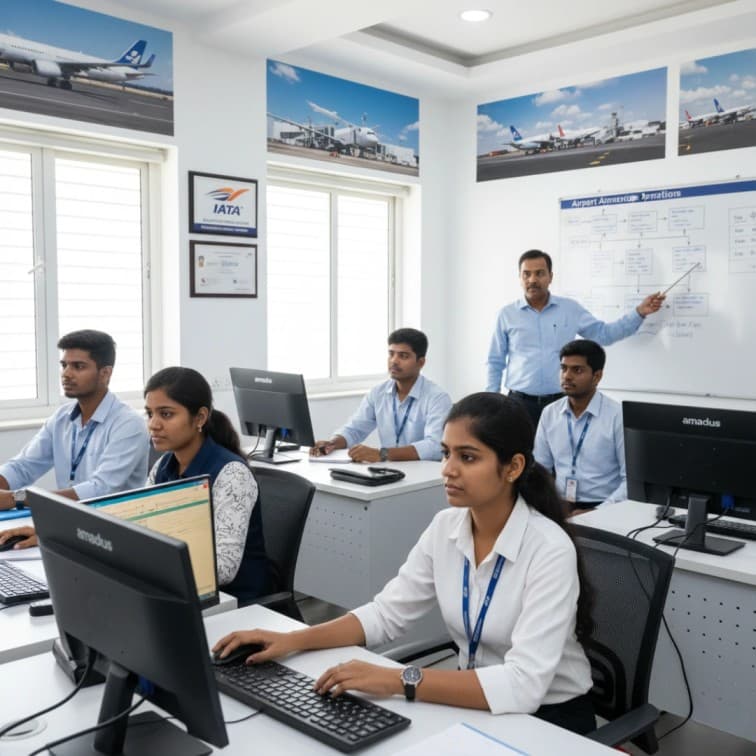
Infrastructure quality significantly impacts learning effectiveness in aviation education. Proper CRS training requires updated computer systems with live booking interfaces. Airport operations training needs simulation equipment. Soft skills development benefits from video recording facilities for mock interviews. Assembling all these resources is financially challenging for small, specialized institutes but entirely feasible for comprehensive programs serving larger student populations.
When researching aviation training options, examine infrastructure carefully. Quality institutes showcase well-equipped training centers, modern classrooms with audio-visual facilities, computer labs with current software, and professional grooming studios. These investments reflect institutional commitment to student success and indicate the program's ability to deliver industry-standard training.
Resource optimization extends beyond physical infrastructure. Comprehensive institutes employ diverse faculty—industry veterans for practical insights, academic experts for theoretical depth, and soft skills trainers for personality development. This faculty diversity, coordinated under one institutional umbrella, provides students with well-rounded education that specialized institutes struggle to match.
Infrastructure Advantages Include:
Technology Access: Updated CRS systems (Amadeus, Galileo) and airline databases for realistic training.
Simulation Facilities: Mock airport counters, check-in systems, and baggage handling equipment.
Professional Studios: Grooming labs, interview preparation rooms, and presentation facilities.
Digital Resources: E-learning platforms, video libraries, and online assessment tools.
Campus Facilities: Libraries, student lounges, and career counseling centers supporting holistic development.
Conclusion
Selecting the right aviation course near me requires understanding the strategic advantages of comprehensive, integrated training programs. Kerala's premier aviation colleges in Kochi and Thrissur have evolved beyond traditional fragmented approaches, offering complete solutions that seamlessly combine theoretical education, practical training, industry certifications, soft skills development, and placement support under one roof.
This integrated model delivers tangible benefits: 15-20% cost savings through resource optimization, 25-30% faster program completion through efficient scheduling, consistent quality standards across all training components, and superior placement outcomes through stronger industry relationships. More importantly, single-point accountability ensures student concerns receive prompt attention and rapid resolution, eliminating the blame-shifting common in multi-vendor arrangements.
The aviation industry's continued growth in India and globally guarantees strong demand for well-trained professionals. By choosing a comprehensive institute with IATA certification, modern infrastructure, experienced faculty, and proven placement records, you position yourself for career success in this dynamic sector. Take time to research thoroughly, visit campuses, evaluate infrastructure, and speak with alumni before making your decision. Your aviation career deserves the solid foundation that only quality, comprehensive training can provide.
Frequently Asked Questions
What is the best aviation course for beginners in Kerala?

The Diploma in Airport Management is ideal for beginners, offering comprehensive training in airport operations, passenger services, and customer handling. This 6-12 month program provides foundational skills needed for entry-level aviation positions.
How long does it take to complete an aviation course near me?
Aviation courses in Kerala typically range from 6 months for certificate programs to 3 years for degree courses like BBA Aviation. IATA-specific certifications can be completed in 3-6 months, making them popular among students seeking quick industry entry.
Are aviation courses in Kochi expensive?
Aviation course fees in Kochi range from ₹30,000 for basic diplomas to ₹2-3 lakhs for comprehensive degree programs. Kerala's aviation institutes generally offer more affordable options compared to major metros while maintaining quality standards and IATA accreditation.
What jobs can I get after completing an aviation course?
Aviation graduates can work as passenger service agents, ground staff, ticketing executives, cabin crew, airport operations coordinators, or travel consultants. With experience, opportunities expand to supervisory roles, airline management, and specialized positions in cargo or safety.
Do I need any specific qualifications for aviation courses?
Most diploma courses require 10+2 completion, while degree programs need 10+2 with minimum percentage criteria. Good communication skills in English are essential. Some specialized courses may have age limits or specific educational backgrounds as prerequisites.
Is IATA certification necessary for aviation careers?
While not mandatory, IATA certification significantly enhances employability and salary prospects. Many airlines and airports prefer candidates with IATA training as it demonstrates global industry-standard knowledge. Certified professionals typically earn 30-40% more than non-certified peers.
What is the placement record of aviation colleges in Kerala?
Reputable aviation institutes in Kerala report placement rates of 70-85% within six months of course completion. Leading institutes maintain partnerships with major airlines, airports, and travel companies, facilitating campus recruitment drives and ensuring strong career opportunities for graduates.
Can I pursue aviation courses through distance learning?
While some theoretical components can be studied online, practical aviation training requires hands-on experience with CRS systems, airport procedures, and customer service scenarios. Quality institutes combine classroom learning with practical sessions for comprehensive skill development.
What are the career growth prospects in aviation?
The aviation industry offers excellent growth opportunities with clear progression paths. Starting from ground-level positions, professionals can advance to supervisory, managerial, and specialized aviation roles within 5-7 years. Continuous learning and additional certifications accelerate career advancement.
How do aviation colleges in Kochi compare to other Indian cities?
Aviation colleges in Kochi offer comparable quality to metro institutes while providing cost advantages, proximity to Cochin International Airport for practical exposure, and strong regional job networks. Many institutes hold the same IATA accreditations as larger city counterparts, ensuring education standards